
Superior performance sealing element that provides 100% resistance to all chemicals, acids and solvents and can operate at extreme temperatures between -200°C and +260°C. Fully compliant with food and drug safety (FDA), pure and expanded options.
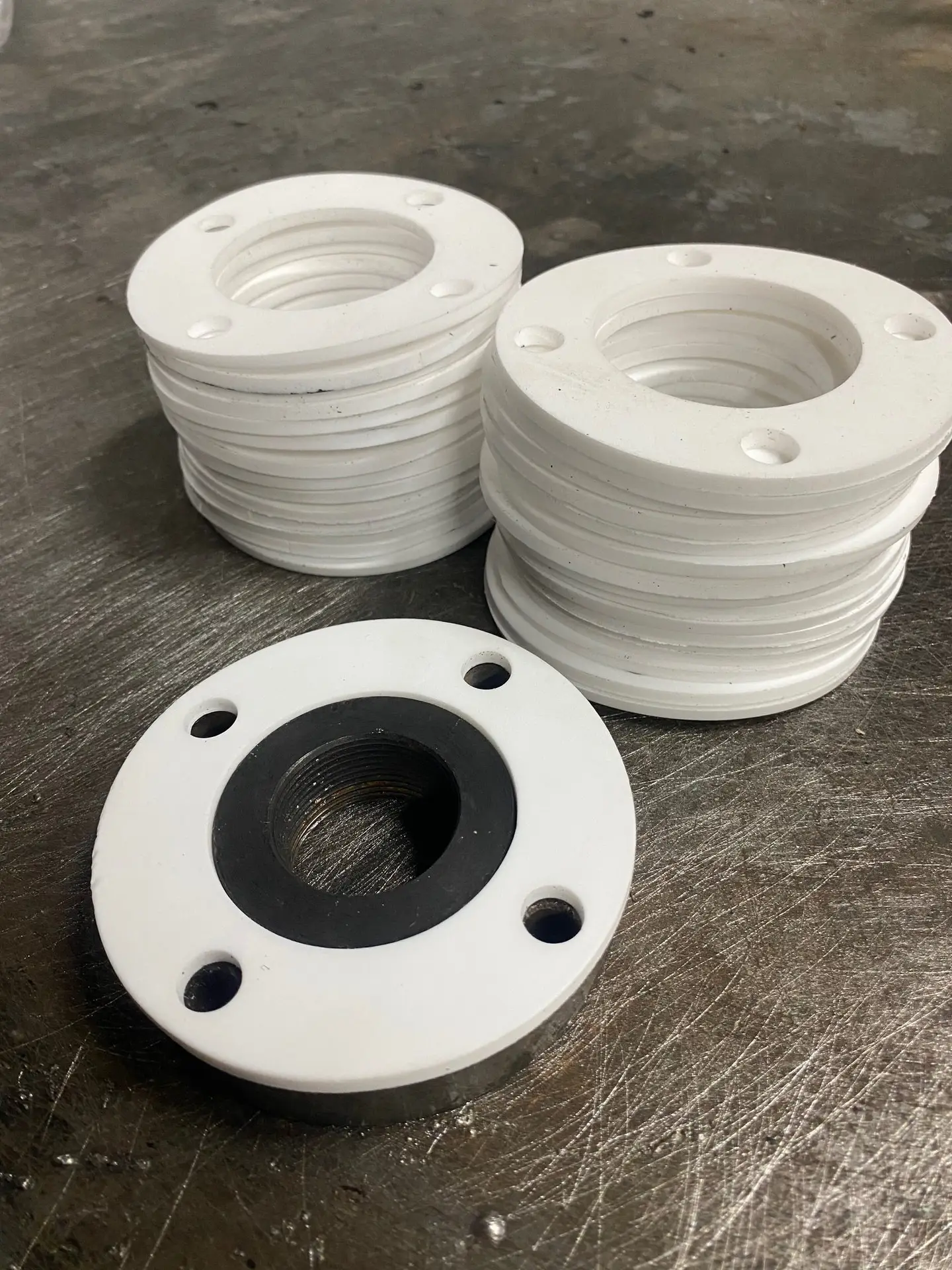
The most aggressive fluids in the industry (strong acids, bases, solvents) melt or deform standard rubber or klingyrite gaskets in a short time. The only solution at such critical points is PTFE (Polytetrafluoroethylene), commercially known as Teflon gaskets.
PTFE, whose coefficient of friction is one of the lowest solid materials in the world, does not stick to the surface, is not affected by moisture and does not conduct electricity. As Batı Gasket; we offer two different solutions according to the condition of your flange surface:
Pure (Virgin) PTFE: It has a hard structure and is used on smooth and machined flange surfaces.
Expanded PTFE: Soft in texture. It provides sealing with much lower torque by adapting to distorted or rough flange surfaces (spongy structure).
🧪Excellent Chemical Resistance: Withstands all chemicals in the world except molten alkali metals in the 0-14 pH range.
🌡️ Wide Temperature Range: Cryogenic (freezing) -200°C cold to +260°C temperature does not deteriorate its structure.
🍏 Food and Drug Approval: It does not contain odour, taste and toxic substances. Since it complies with FDA standards, it can be safely used in food lines.
Electrical Insulation: It has high dielectric resistance and can be used as insulation gasket.
🚫 Non-Stick: It does not adhere to the flange surface, dismantling and cleaning is very easy.
Chemical and Petrochemical Plants (Acid, caustic lines)
Food, Beverage and Dairy Industry
Pharmaceutical and Cosmetics Production
Oxygen Lines (Thanks to its oil-free and fireproof structure)
Paint and Solvent Industry
| Feature | Value / Description |
| Material | Pure PTFE (Virgin) or Expanded PTFE |
| Colour | White |
| Chemical Resistance (pH) | 0 – 14 (All Acids and Bases) |
| Temperature Resistance | -200°C to +260°C |
| Compressive Strength | 80 Bar (varies according to flange structure) |
| Standards | FDA 21 CFR 177.1550, ASTM D-4894 |