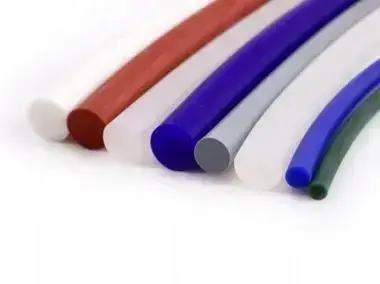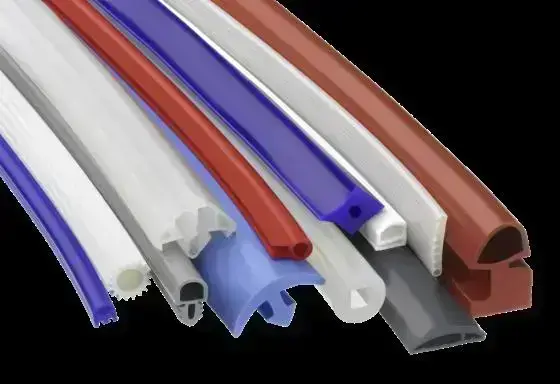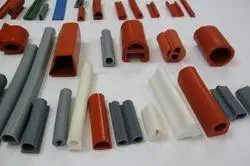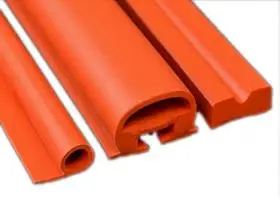
Flexible sealing profiles specially designed for high-temperature oven doors, autoclaves and panel covers; can be produced in desired cross-section (e, P, D, U, etc.) and have a temperature resistance of -60°C to +250°C.
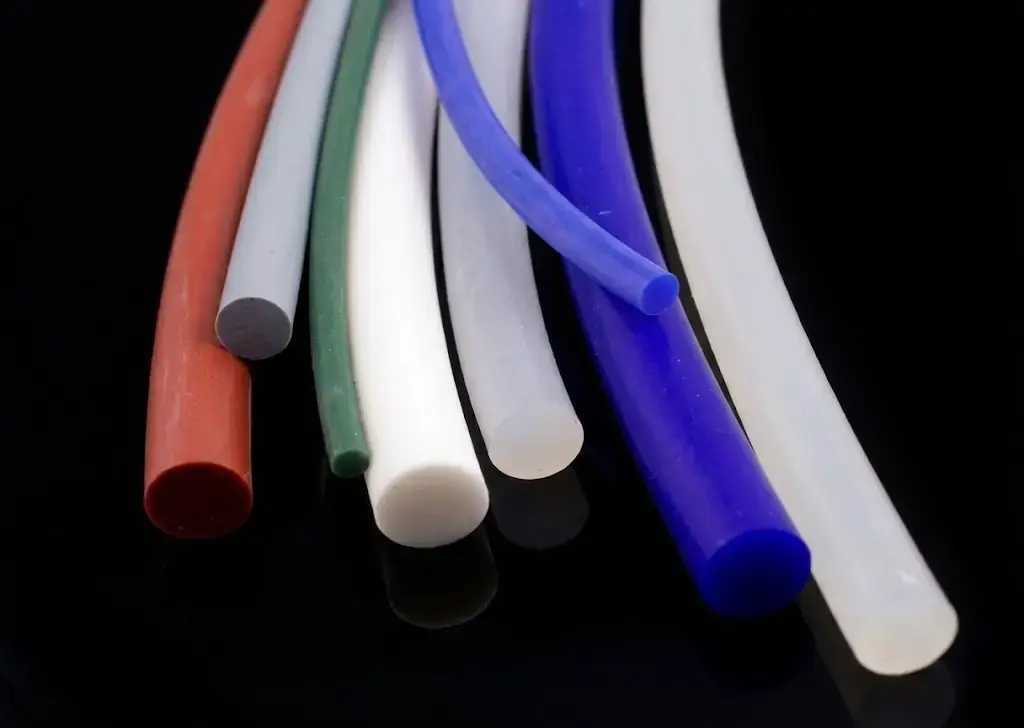
The gaps between the cover and the body in industrial machines are not standardised. Each machine has a different duct, compression allowance and temperature value. Therefore, standard rubber strips will not work for you.
Silicone Wicks are produced with a “special mould” in order to fit the sealing channel of your machine exactly. As Batı Conta, we produce silicone profiles in e-profile, P-profile, D-profile, mushroom head or much more complex geometric shapes by sticking to your technical drawing or sample.
Unlike standard EPDM seals, it does not melt, stick and harden (cream) at oven temperature (+250°C). Thanks to its “memory” feature, when the cover is opened, the crushed profile takes its old form again and does not create sealing weakness.
📐 Unlimited Shape Options: Not only round or square; production in any geometric cross-section specific to your machine.
🌡️ Thermal Resistance: Maintains its form in industrial ovens, drying tunnels and steam boilers.
🧘 Elastic Memory (Compression Set): Even if it is under constant pressure, it returns to its former shape when the load is removed.
🍏 Hygienic Structure: It can be produced with raw materials in accordance with food regulations, it does not make odour in food ovens.
🎨 Colour Option: Apart from the standard transparent and red, it is possible to produce according to the colour of your machine (blue, grey, black).
Industrial Bread and Paint Oven Covers
Autoclave and Sterilisation Equipment
Electrical Panel Sealing Gaskets
Ship and Yacht Porthole Covers
Lighting Fixtures (IP Protection)
Aluminium Joinery and Facade Systems
| Feature | Value / Description |
| Material | VMQ (Silicone Rubber) |
| Profile Types | e, P, D, U, H, Lama, Square, Special Section |
| Hardness | 40 – 80 Shore A (soft/hard according to request) |
| Temperature Resistance | -60°C to +250°C (short term +300°C) |
| Production Method | Extrusion (Drawing) |
| Food Compatibility | FDA Standards (On request) |