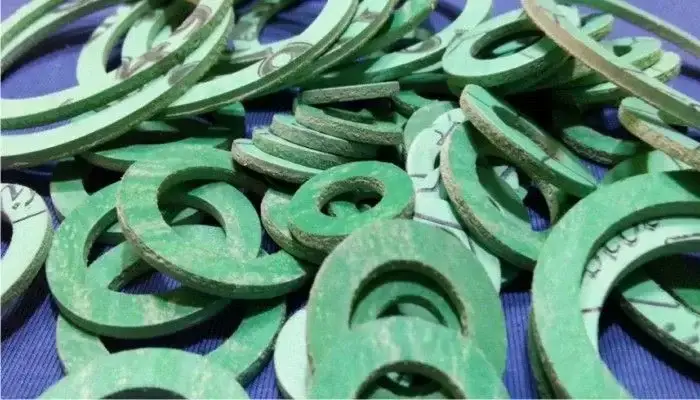
We often hear it in industrial bazaars or factories: “Give me two green gaskets from there.” So, is the colour of the gasket just an aesthetic preference or does it have a technical meaning?
“Klingirit” materials, which have been used in the sealing sector for years, have evolved with the development of technology and changes in occupational health standards. Non-Asbestos Klingirit (Non-Asbestos) sheets, which replaced the old type asbestos products, constitute the backbone of industrial sealing today.
In this article, we examine what non-asbestos klingirite is and what the colours such as Green, Red, Black in the market actually mean.
What is Asbestos Free Klingirit? Why Asbestos Banned?
This material, popularly known as “Klingirit” due to its brand name, is technically known as **”Compressed Fibre Gasket “**.
Asbestos used to be used in these sheets because of its high heat resistance. However, when it was confirmed that asbestos is carcinogenic and causes fatal diseases through respiration, it was banned worldwide.
Asbestos-free Klingirit is produced by pressing harmless fibres such as aramid fibre, glass fibre or carbon fibre with special rubber binders (NBR, SBR, EPDM) under high pressure.
-
Advantage: Non-carcinogenic, more flexible and fully compliant with modern industrial standards (DIN, ASTM).
Seal Colours: Green, Red, Black…
On the market, klingirite sheets are usually produced in certain colours. Although these colours may vary slightly depending on the manufacturer (Klinger, Frenzelit, local brands, etc.), there is a general “colour language” established in the sector.
Here are the general technical equivalents of these colours:
1. Green Klingirit (Standard / General Purpose)
It is the most frequently encountered species in industry.
-
Content: It usually consists of Aramid fibres and NBR (Nitrile) binder.
-
Area of Use: Water, light oils, gas lines and low pressure steam systems.
-
Feature: It is economical and solves 80% of general installation works.
2. Red / Orange Klingirit (Steam and Heat)
Generally, types with one click higher heat resistance or different binders are used.
-
Area of Use: Hot water, steam and some light chemicals.
-
Caution: Sometimes red colour can also be used for brand separation only, therefore the technical data sheet (TDS) of the product should be consulted.
3. Black Klingirite (Graphite / Reinforced)
It gets its colour from the graphite additive.
-
Content: Carbon fibres or graphite filler. It usually contains steel wire reinforcement (wired graphite).
-
Area of Use: High temperature, steam boilers, heavy industry and high pressure flanges.
-
Characteristics: Non-stick, very resistant to heat.
4. Blue Klingirite
It is a colour generally preferred for models with food compatibility or special chemical resistance.
Which Gasket to Choose for Which Fluid?
Colours give you a clue, but the real decision is determined by “Binder Type” and “Ambient Conditions”. Wrong choice will cause the gasket to melt or explode in a short time.
-
Water and Air Lines: Green Klingirit (Standard) is sufficient.
-
Oil and Fuel Lines: NBR binder (oil resistant) klingirite must be selected.
-
High Pressure Steam: Wire Graphite (Black) or Spiral Wound Gasket should be preferred.
-
Acid and Chemical: Teflon (PTFE) gasket should be used instead of klingirite.
Conclusion: Look at Technical Value, Not Colour
Saying “This will do the job” by looking only at the colour of a gasket is one of the biggest mistakes made in the industry. As Batı Gasket, we offer our customers not only products but also engineering.
You can buy what you need as a plate from our large plate stocks in our warehouse or you can supply it in special sizes for your project, made into gaskets with our laser cutting technology.
Sealing is not left to chance. Consult our expert team for the right material selection.