When it comes to energy efficiency in industrial plants, the first point that comes to mind is steam lines. The slightest sealing weakness in a steam line causes not only energy loss, but also serious occupational safety risks and unplanned downtime. So, which is the right choice for steam valves and flange connections in your plant: Asbestos Free Klingirit or Spiral Wound Steel Gasket?
In this article, we examine in technical details how to make the right gasket selection according to operating pressure and temperature values.
1. Low and Medium Pressure Lines: Asbestos Free Klingirit Gaskets
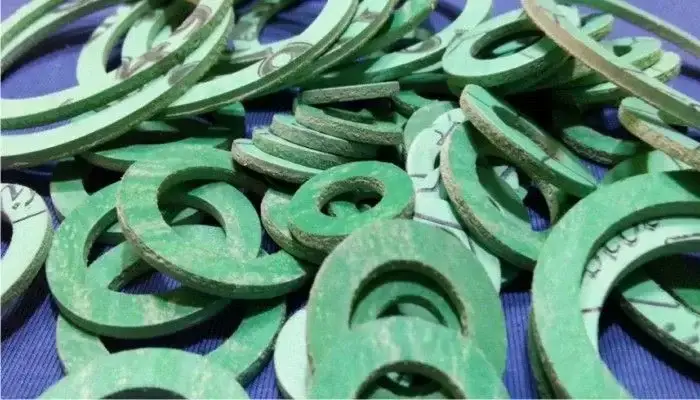
Generally, asbestos-free klingrite gaskets (Compressed Fibre Gaskets) are the most economical and common solution for heating lines, hot water returns and low pressure (saturated) steam lines.
However, the perception that “every klingirite can withstand steam” is wrong. The klingirite gasket to be used for steam must have the following properties:
-
Binder Structure: Instead of standard NBR binder gaskets, special mixtures with higher temperature resistance and resistance to hydrolysis effect of steam should be preferred.
-
Reinforcement: In some applications, “wired” (steel braided) klingirite sheets may be preferred to prevent the gasket from bursting.
When to Prefer?
-
Temperature: In lines below 200°C – 250°C.
-
Pressure: Generally PN16 and PN25 class flanges.
-
Advantage: Economical, easy to install and tolerates surface roughness well.
2. High Pressure and Superheated Steam: Spiral Wound Steel Gaskets
When the temperature exceeds 250°C or the pressure rises to PN40 / Class 150 and above, klingrite gaskets may harden and become brittle (embrittlement) over time. This is where Spiral Wound Gaskets come into play.
Spiral gaskets are produced by intertwining V-shaped twisted stainless steel strips and filler material (usually graphite). This “spring” effect gives the gasket tremendous flexibility and recovery capability.
Why Spiral Gasket for Steam?
-
Resistance to Thermal Shocks: As steam lines heat up and cool down, flanges expand and contract. Spiral gaskets protect the sealing by absorbing this mobility like a spring.
-
Mechanical Resistance: Prevents blow-out of the gasket in high pressure impacts (ram impact).
-
Graphite Filler: Filling material for steam applications must be Pure Graphite. Teflon filler can flow at high temperature.
When to Prefer?
-
Temperature: 250°C and above in all applications.
-
Pressure: PN40, Class 150, Class 300 and above high pressure lines.
-
Advantage: Long life, maintenance free and sealing even under the most demanding conditions.
Comparison and Conclusion: Which One Should I Choose?
Choosing the right gasket is not only “sealing” but also “cost management”. Using spiral gasket unnecessarily increases cost, while installing klingirit at high pressure is a risk.
| Feature | Asbestos Free Klingirit | Spiral Coiled Steel (Graphite) |
| Recommended Max. Temperature | ~250°C | +450°C (for steam) |
| Pressure Class | PN6 – PN40 | PN16 – PN160 / Class 2500 |
| Flexibility / Springback | Centre | Very High |
| Cost | Low | Medium / High |
| Place of Use | Heating, Saturated Steam | Superheated Steam, Main Steam Lines |
West Gasket Solutions
If you don’t tolerate energy loss in your business’s steam lines, the expertise of West Gasket is on your side.
-
Stock-delivery klingirit and spiral gaskets for standard flanges.
-
Custom size manufacturing solutions for your old or deformed flanges.
Not sure which gasket is suitable for your system? Contact our technical team, don’t take any risks.